9 Courthouse Wedding Ideas That Feel Special
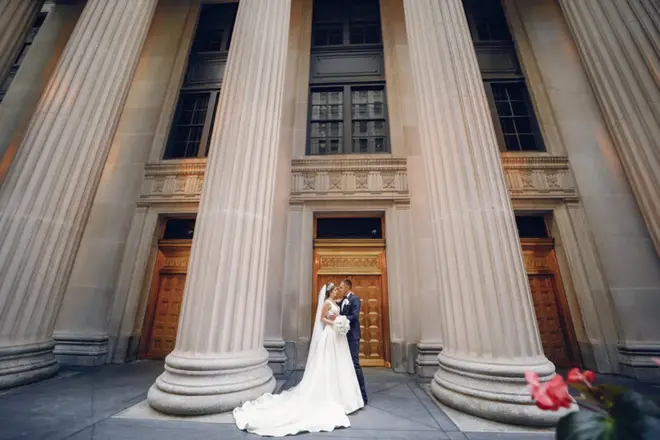
A courthouse wedding removes the noise of the wedding industry, and that’s exactly the point. You are not skipping the celebration. You are choosing a different kind of celebration, one that centers the two of you and the commitment you are making.
The civil ceremony itself typically lasts 10 to 15 minutes inside a county clerk’s office or municipal courtroom. But the memories around that ceremony can carry the same weight as any large venue wedding. A few intentional choices turn a short legal proceeding into a day you will talk about for years.
These nine courthouse wedding ideas will help you build a day that feels personal, meaningful, and entirely yours.
Hire a Photographer for Your Courthouse Ceremony
Professional photography is the single most impactful investment for a courthouse wedding. Civil ceremonies move fast, and you will not get a second take. A wedding photographer captures what you will miss in real time: the expression on your partner’s face during the vows, the reactions of your witnesses, and the walk out of the building as a married couple.
Courthouse photo sessions are short, so many photographers offer mini wedding packages at a fraction of the typical wedding photography rate. You are looking at 30 to 60 minutes of coverage, which is usually enough to document the ceremony and take a handful of portraits outside the courthouse steps.
If hiring a professional photographer is not in the budget, ask a friend with a decent camera to come along. The important thing is that someone is taking photos before, during, and after the ceremony. Your future self will thank you.
Choose an Outfit That Reflects Your Personal Style
Most courthouses have no formal dress code beyond appropriate attire. That freedom is a gift. Some brides wear a classic white wedding dress. Others choose a tailored jumpsuit, a vintage suit, or their favorite colored dress. Grooms and partners have the same range, from a fitted blazer and dress pants to something that reflects their personality.
The one rule worth following: pick something that makes you feel great when you look in the mirror. If you want a formal look, go formal. If you want to wear your favorite boots with a sundress, do that. The day belongs to you.
For outfit ideas, see our courthouse wedding dress code guide and our guide to civil wedding dresses for brides. Grooms planning a city hall look can also check out our groom suit ideas for city hall weddings.
Bring Your Closest People as Witnesses
Most courthouses allow a small number of guests in the ceremony room, typically between two and six people. That limit works in your favor. Instead of building a guest list of 150, you choose the handful of people who matter most.
Call your county clerk’s office ahead of time and ask about guest capacity. Some courthouses are strict, and you do not want to turn someone away at the door. Once you know the number, choose your witnesses with care. These are the people who will stand closest to you during one of the biggest moments of your life.
If you are keeping it to just the two of you plus your required witnesses, that intimacy carries real power. A small room, a few people, and a sincere promise create something that large weddings rarely replicate.
Planning how many people to invite is simpler for a courthouse ceremony, but knowing your venue’s rules ahead of time prevents surprises.
Write Personal Wedding Vows
Many courthouse ceremonies follow a standard legal script read by a judge or officiant. But plenty of court officiants will let you read personal vows before or after the legal portion. This is your chance to say something real to each other in front of the people who showed up.
Your vows do not need to be long. A few honest sentences carry more weight than a rehearsed speech. Talk about what you love about your partner, what you are promising, and why you are choosing this life together. If public speaking makes you nervous, writing your vows on a card and reading them aloud is perfectly acceptable.
Not sure how long to go? Our guide on how long wedding vows should be covers practical length guidelines for both traditional and courthouse settings.
Plan a Reception After the Ceremony
The courthouse ceremony might take 15 minutes, but the celebration does not need to stop there. A reception after the civil ceremony gives you a chance to enjoy the day with a wider circle of friends and family who could not fit in the courtroom.
This can be as simple or as elaborate as you want:
- Restaurant reception: Book a private dining room or a long table at your favorite restaurant
- Backyard celebration: Host a barbecue, garden party, or potluck at home
- Brunch reception: Popular for couples who marry during courthouse morning hours
- Rooftop or bar gathering: Reserve a space at a local bar or rooftop venue
Catering costs for a simple plated meal start around $25 to $35 per person, but food trucks, pizza parties, and potlucks work just as well. The point is spending time with the people you love after making it official.
For more ideas, see our top reception ideas after a courthouse wedding and our full wedding reception checklist.
Choose Flowers That Match Your Courthouse Wedding Style
A bridal bouquet is one of the easiest ways to add color and personality to your courthouse wedding photos. It does not need to be an expensive arrangement from a florist. A $20 bundle from a local flower market, a single stem of your favorite bloom, or a dried flower arrangement can photograph beautifully.
Think about what colors and textures fit your overall look:
- Wildflower bundles create a relaxed, natural feel
- Peonies or garden roses in a tight cluster look polished and classic
- Succulents and greenery work for couples who prefer something non-traditional
- Dried flowers like pampas grass or lavender last long after the wedding day
If you are bringing guests, consider small boutonnieres or corsages so everyone feels part of the occasion. With only a handful of people attending, these small touches stay affordable and meaningful.
Our guide to popular wedding flowers for bridal bouquets breaks down the best options by season and style.
Add Personal Touches Only You Could Choose
Courthouse ceremonies follow a set structure, but everything around the ceremony is yours to customize. This is where a civil wedding starts feeling like your wedding.
Ideas that couples have used to personalize their courthouse wedding day:
- A playlist for the drive. Create a shared playlist of songs that mean something to both of you. Play it on the way to the courthouse and again at your reception.
- A signature drink. Pick one cocktail or mocktail that represents you as a couple. Toast with it right after the ceremony.
- Handwritten letters. Write each other a letter to read privately before the ceremony. Some couples exchange letters in the car before walking in.
- A meaningful accessory. Wear your grandmother’s brooch, your father’s watch, or jewelry from a trip you took together.
- Custom vow booklets. Print your vows in a small booklet you can keep afterward as a keepsake.
The most memorable personal touches are specific. They reference your actual life together, not a generic wedding checklist. For more ideas on incorporating meaningful elements, our guide to unique unity ceremony ideas has options that work for intimate ceremonies.
Set Up a Simple Wedding Gift Registry
A gift registry is not expected for courthouse weddings, but family and friends will probably ask what you want. A small registry saves everyone the guesswork.
Keep it practical. Think about what you actually need for your home: a quality knife set, good towels, a cast iron skillet, or a coffee maker upgrade. A list of 10 to 15 items gives people options without the pressure of a massive registry.
Some couples skip physical gifts entirely and set up a fund for their honeymoon, a future house down payment, or an anniversary trip. Cash funds are widely accepted and often preferred by guests who would rather contribute to an experience than guess at your taste in kitchenware.
Design the Rest of Your Wedding Day
The courthouse ceremony is the legal part. Everything after is yours to plan however you want. Some couples treat the rest of the day as a mini-honeymoon: a dinner at a special restaurant, a night at a boutique hotel, or a sunset walk at a place that holds meaning for them.
Others keep things deliberately low-key. Takeout on the couch, a movie marathon, ordering dessert from three different bakeries. The lack of a rigid schedule is the whole appeal. There is no DJ waiting, no timeline to follow, no coordinator managing the next event.
If keeping costs down is a priority, skipping the traditional reception in favor of a private evening together is one of the simplest ways to reduce wedding expenses. You can also read about the full comparison between courthouse and traditional weddings to see where couples save the most.
Making Your Courthouse Wedding Day Yours
A courthouse wedding gives you something that larger weddings often do not: the freedom to focus on what actually matters to you. No pressure to follow someone else’s template. No obligation to meet expectations you did not set.
Pick the ideas from this list that feel right, skip the ones that do not, and add your own. The couples who look back on their courthouse weddings most fondly tend to be the ones who stopped worrying about what a wedding is “supposed” to look like and planned what felt true to them.
If you are still deciding where to get married, our city guides cover courthouse wedding details for locations across the country, including costs, marriage license requirements, and what to expect on the day. And if you want to avoid the most common planning pitfalls, read our guide on courthouse wedding mistakes and how to avoid them. For a complete walkthrough of the process, our guide on how to get married at a courthouse covers everything from the marriage license to what happens on the day. Browse our more courthouse wedding guides for additional planning resources.
Frequently Asked Questions
How much does a courthouse wedding cost?
A courthouse wedding typically costs between $30 and $100 for the ceremony fee, plus the marriage license fee, which ranges from $35 to $115 depending on the county and state. The total legal cost for a civil ceremony at a county clerk’s office usually stays under $200. Additional costs like photography, flowers, and a reception are separate and entirely up to you.
What do you wear to a courthouse wedding?
Most courthouses have no formal dress code. Brides often wear white dresses, jumpsuits, pantsuits, or cocktail-length outfits. Grooms typically choose a suit, blazer with dress pants, or smart casual attire. The right choice is whatever makes you feel confident and comfortable for your ceremony photos.
Can you have guests at a courthouse wedding?
Yes, most courthouses allow a small number of guests, typically between two and six people in the ceremony room. Guest limits vary by location, so call your county clerk’s office beforehand to confirm capacity. You will need at least one or two witnesses present, depending on your state’s marriage laws.
How long does a courthouse wedding ceremony last?
A civil ceremony at a courthouse typically lasts 10 to 15 minutes. The officiant reads the legal declarations, you exchange rings and vows (standard or personal), and the marriage certificate is signed by both parties and the witnesses. The entire visit, including paperwork and waiting, usually takes 30 minutes to an hour.
Do you need an appointment for a courthouse wedding?
Requirements vary by county. Some courthouses perform civil ceremonies on a walk-in basis during business hours, while others require an appointment booked days or weeks in advance. Major cities like New York, San Francisco, and Los Angeles tend to require appointments. Contact your local county clerk’s office to confirm scheduling requirements and available ceremony times.