Prenuptial Agreements: What They Cover and Who Needs One
Why Prenups Deserve an Honest Conversation
Bringing up a prenuptial agreement before your wedding can feel awkward. Nobody wants to talk about divorce while planning a celebration. But a prenup is not a prediction that your marriage will fail. It is a practical financial plan that protects both partners, no matter what happens down the road.
You buy car insurance without expecting a crash. A prenup works the same way. It sets clear expectations about finances, property, and responsibilities so that both partners enter the marriage with full transparency.
Whether you are planning an intimate courthouse ceremony or a large celebration, understanding how prenuptial agreements work helps you make an informed decision about your financial future together.
What a Prenuptial Agreement Actually Is
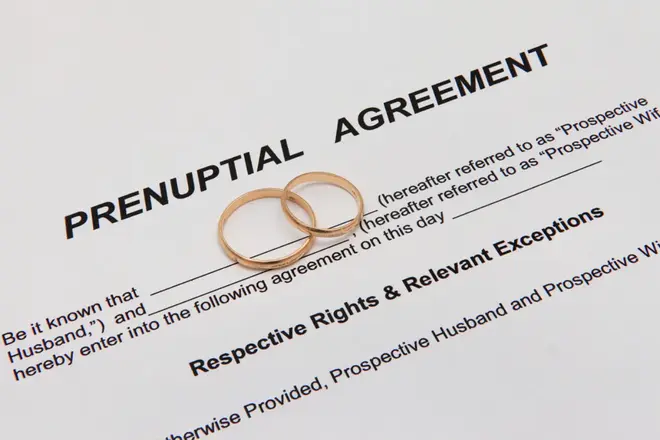
A prenuptial agreement (often shortened to “prenup” or called a “premarital agreement”) is a legally binding contract between two people who plan to marry. The agreement spells out how assets, debts, and financial responsibilities will be handled during the marriage and divided if the marriage ends through divorce or death.
For a prenup to be legally valid, it generally needs to meet these requirements:
- Written and signed by both parties. Verbal agreements will not hold up in family court.
- Voluntary. Neither partner can be pressured or coerced into signing.
- Full financial disclosure. Both partners must honestly list their assets, debts, and income.
- Witnessed and notarized. Most states require at least a notary, and some require witnesses present at signing.
- Fair to both sides. Courts can throw out agreements that are heavily one-sided or unconscionable.
Each state has its own laws governing prenuptial agreements. The Uniform Premarital Agreement Act (UPAA), adopted in some form by 28 states, provides a common framework, but specific requirements vary. Working with a family law attorney in your state is always a smart move.
What a Prenup Should Cover
A well-drafted prenuptial agreement addresses several financial topics. Here are the most common areas couples include:
Separate vs. marital property. This is the core of most prenups. You and your partner decide which assets remain individually owned (separate property) and which become shared (marital property). Without this distinction, your state’s default property division laws apply, and those laws may not match what either of you would prefer. Community property states like California divide marital assets 50/50, while equitable distribution states divide assets based on what a judge considers fair.
Existing debts. If one partner carries student loans, credit card debt, or a business loan, the prenup can specify that this debt stays with the person who brought it into the marriage. This protects the other spouse from being held responsible for debts they did not create.
Family businesses and heirlooms. If you own a business, hold family property, or expect a future inheritance, a prenup can keep these assets in your family line. Without this protection, a business you built before the marriage could become subject to division during divorce proceedings.
Spousal support terms. Some agreements outline whether alimony will be paid, for how long, and under what conditions. This removes uncertainty and gives both partners a clear picture of financial expectations after separation. Courts retain the right to override spousal support terms they find unfair.
Children from previous relationships. If either partner has children from a prior marriage, the prenup can specify how certain assets will be designated for those children. Note that child custody and child support terms are not enforceable through a prenup. Courts always decide those matters based on the child’s best interests at the time of the proceeding.
Couples who are thinking through these financial details often benefit from also reviewing the legal benefits of marriage in their state to understand what protections marriage provides by default.
Who Should Consider Getting a Prenup
Prenups are not only for wealthy couples. Several situations make a prenuptial agreement particularly worthwhile:
- You or your partner own a business. Without a prenup, your spouse could claim a share of a company you started years before you met. A prenup defines business ownership boundaries.
- One partner has significantly more debt. The prenup protects the debt-free partner from becoming liable for student loans, medical bills, or credit card balances they did not incur.
- You have children from a previous relationship. A prenup helps protect assets you want to pass on to your kids from a prior marriage.
- One partner is giving up a career. If one of you plans to stay home with children, a prenup can include spousal support provisions that acknowledge that financial sacrifice.
- Either of you expects a large inheritance. Inheritances can become marital property in some states if they are commingled with shared accounts or assets.
- You want financial clarity from the start. Many couples find that the process of creating a prenup actually strengthens their communication about money, spending habits, and long-term financial goals.
Even couples who are keeping their wedding small and simple can benefit from this kind of financial planning. The size of your ceremony has nothing to do with the complexity of your financial lives.
When to Start the Prenup Process
There is no single legal deadline for signing a prenup, but timing matters. Most family law attorneys recommend starting the conversation at least three to six months before the wedding.
Here is why early timing helps:
- Avoids the appearance of coercion. A prenup signed the night before the wedding is much easier to challenge in court. Judges look at whether both parties had enough time to review the terms, ask questions, and consult their own attorneys independently.
- Gives both partners time to negotiate. A good prenup is the product of real discussion, not a take-it-or-leave-it document. Back-and-forth negotiation between attorneys takes weeks, sometimes months.
- Frees up your final weeks for wedding planning. Once the prenup is signed and filed, you can focus on more enjoyable details like reception plans and choosing what to wear.
If you have already passed that window, a postnuptial agreement is an option in most states. Postnups cover the same ground, though some states apply stricter legal scrutiny to agreements made after the marriage has begun.
Before you reach the signing stage, it helps to understand the important things couples should know before getting married, including financial planning basics.
What Can Invalidate a Prenup
Not every prenup survives a legal challenge. Courts can partially or fully invalidate a prenuptial agreement for several reasons:
Coercion or duress. If one partner was pressured into signing, particularly close to the wedding date, a court may rule that the agreement was not truly voluntary. Some states, including California, require a minimum waiting period between presenting the agreement and the wedding ceremony.
Incomplete financial disclosure. Both partners must fully and honestly disclose their finances. If one person hid assets, underreported income, or failed to mention a significant debt, the entire agreement could be thrown out. Full disclosure is the foundation of an enforceable prenup.
Unconscionable terms. A prenup that leaves one spouse with nearly everything and the other with nothing is unlikely to survive judicial review. The agreement needs to be fair, even if it is not perfectly equal. Courts evaluate fairness both at the time of signing and at the time of enforcement.
Unenforceable provisions. Some clauses simply cannot be enforced by a court. A prenup cannot dictate personal behavior during the marriage (like household chores, frequency of visits to in-laws, or weight requirements). Courts will often strike individual clauses while keeping the rest of the agreement intact, a process called “severability.”
Lack of independent legal counsel. While not required in every state, having each partner represented by their own attorney significantly strengthens the agreement’s enforceability. When both partners share a single lawyer, it raises questions about whether the advice was truly impartial.
How Much a Prenup Costs
Attorney fees for a straightforward prenuptial agreement typically range from $1,500 to $5,000 per person. More complex situations involving business valuations, multiple properties, or significant assets can push costs to $10,000 or more per person.
That said, a prenup is significantly less expensive than litigating a contested divorce. Couples who enter a divorce without a prenup often spend tens of thousands of dollars in legal fees arguing over asset division that a prenup could have settled in advance.
Some couples reduce costs by discussing the major terms together first, then bringing a clear outline to their attorneys. The attorneys handle the legal language and verify nothing is missing, but the couple has already done the groundwork on what they want.
Online prenup services exist at lower price points ($200 to $800), but they carry risks. A templated agreement may not account for your state’s specific requirements, and the lack of independent legal counsel for each partner can create enforceability problems later.
Your Prenup Is a Partnership Tool
The most productive way to approach a prenuptial agreement is as a financial planning exercise you complete together. Couples who go through the process often say it improved their communication about money, expectations, and long-term goals.
If your partner is hesitant, approach the conversation with openness rather than ultimatums. Explain that a prenup protects both of you, not just the partner with more assets. Frame it as a way to build financial trust before the marriage begins.
If you truly cannot reach an agreement on terms, that disagreement itself is valuable information about your financial compatibility. Premarital counseling can help couples work through these conversations with a neutral third party.
A prenup does not change the love or commitment behind your wedding day. It adds a layer of financial clarity so you can walk into your marriage, whether at a city hall ceremony or a county clerk’s office, knowing you have planned for every possibility.
Frequently Asked Questions
How much does a prenuptial agreement cost?
Attorney fees for a straightforward prenup typically range from $1,500 to $5,000 per person. Complex situations with business valuations or multiple properties can cost $10,000 or more. Both partners should have their own attorney for independent legal counsel.
Can a prenup be signed after the wedding?
Yes. A postnuptial agreement covers the same financial topics but is signed after the marriage has taken place. Most states recognize postnuptial agreements, though some courts apply stricter scrutiny compared to prenups signed before the wedding.
What can invalidate a prenuptial agreement?
A prenup can be invalidated if one partner was coerced into signing, if either party failed to fully disclose finances, if terms are unconscionably one-sided, or if the agreement includes unenforceable provisions. Having independent legal counsel for each partner strengthens enforceability.
Do both partners need separate lawyers for a prenup?
Having separate attorneys is not legally required in every state, but it significantly strengthens the agreement. When both partners share a single lawyer, courts may question whether the legal advice was truly impartial, which could weaken the prenup during a challenge.
Can a prenup include child custody or child support terms?
No. Courts do not enforce child custody or child support provisions in prenuptial agreements. Family courts determine custody and support based on the child’s best interests at the time of the proceeding, regardless of what any prenup states.