How to Decorate a Wedding Table: 12 Creative Ways
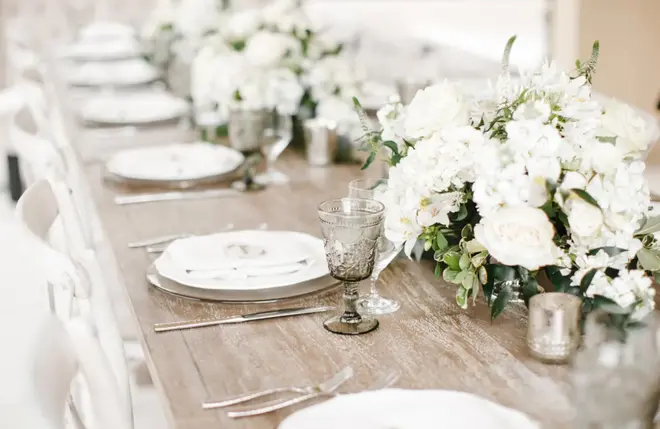
Your wedding tables are where guests will spend most of the reception. They’ll eat there, talk there, laugh there, and (if the drinks are flowing) cry happy tears there. The way those tables look sets the mood for the entire celebration.
The good news? You don’t need a massive floral budget or a degree in interior design to pull off beautiful table decor. A few intentional choices can transform basic banquet tables into something that feels personal, polished, and worth photographing.
Here are 12 creative ways to decorate your wedding tables, whether you’re planning a courthouse wedding reception or a larger celebration.
Work With Your Table Shape, Not Against It
The shape of your tables affects every decoration decision that follows. Rectangular banquet tables call for long, linear arrangements: garland runners, rows of taper candles, or clusters of small bud vases spaced evenly down the center. Round tables work better with a single focal-point centerpiece that guests can see and talk around.
Before you buy a single candle or flower, confirm your table shapes with your venue coordinator. Then design your decor around what’s actually in front of you. Fighting the geometry of your tables leads to arrangements that look forced or oddly proportioned.
Match Your Tables to Your Wedding Theme
Every element on the table should feel like it belongs at your wedding, not just a wedding. If your ceremony has a rustic feel, your tables might feature burlap runners, mason jar vases, and wildflower arrangements. A modern city hall ceremony pairs better with clean lines, metallic accents, and monochromatic color palettes.
Think of your tables as an extension of your overall wedding style. The flowers, linens, charger plates, and even the font on your menu cards should all connect to the same aesthetic. When everything ties together, the whole room feels intentional rather than assembled from unrelated pieces.
If you’re still deciding on a direction, consider how to choose a wedding theme before you start shopping for table decor.
Play With Contrasting Shapes and Textures
Uniformity is safe. It’s also forgettable. Mixing shapes and textures on your tables creates visual interest that catches the eye without overwhelming it.
Try pairing smooth ceramic plates with textured linen napkins. Set geometric candle holders next to organic, loosely arranged flowers. Place a round vase on a rectangular mirrored tray. These small contrasts make each table feel curated rather than catalog-ordered.
The key is restraint. Pick two or three contrasting elements per table, not ten. You want “interesting,” not “craft store explosion.”
Use Varying Heights for Visual Depth
Flat tables with flat decor look, well, flat. Adding height variation transforms a two-dimensional surface into something with real dimension and drama.
Tall taper candles next to low flower arrangements. A raised centerpiece flanked by shorter votive holders. Eucalyptus garlands cascading down from a tall glass vase to table level. These height differences draw the eye upward and create layers that photograph beautifully from every angle.
For long rectangular tables, varying heights is especially effective. It breaks up the visual monotony that comes with a 6-foot or 8-foot surface and gives guests at each end something different to admire.
Bring in Seasonal Flowers and Accents
Seasonal flowers cost less than imported, out-of-season blooms, and they give your tables a natural, grounded quality that forced arrangements can’t match.
Spring weddings shine with peonies, ranunculus, and garden roses in soft pastels. Summer tables come alive with sunflowers, dahlias, and bright trailing greenery. Fall celebrations pair beautifully with chrysanthemums, dried pampas grass, and warm amber tones. Winter weddings can lean into evergreen sprigs, white roses, and frosted hypericum berry accents.
Seasonal blooms also tend to last longer at room temperature because they’re already adapted to the current climate. That means your centerpieces will hold up through the speeches, the dinner, and the dancing.
Go Big on Greenery
Flowers get all the attention, but greenery does the heavy lifting in wedding table design. Eucalyptus garlands running down the center of a table, trailing ivy from tall vases, or simple fern fronds tucked between place settings can fill visual gaps that flowers alone can’t cover.
Greenery is also forgiving. It doesn’t need to be arranged with surgical precision to look good. A slightly wild, overflowing quality actually works in your favor, creating a lush, organic feel that’s hard to achieve with structured floral arrangements alone.
Budget tip: Greenery costs significantly less than cut flowers per stem. If your floral budget is tight, use greenery as the foundation and add a few statement blooms like garden roses or dahlias for color.
Design Thoughtful Place Cards and Table Numbers
Place cards and table numbers are functional items that most couples treat as afterthoughts. That’s a missed opportunity. These small details sit right at eye level when guests take their seats, and they’re one of the first things people notice.
Handwritten calligraphy on thick card stock. Table numbers printed on small acrylic panels. Place cards tucked into mini wreaths or clipped to sprigs of fresh rosemary. These details don’t cost much, but they signal that every element of the table was considered.
Your wedding stationery ties the whole experience together, from the invitation your guests received months ago to the menu card sitting on their plate.
Give Individual Place Settings Their Own Moment
It’s easy to focus on the center of the table and forget about what’s directly in front of each guest. But when someone sits down, their world shrinks to about 18 inches in every direction. That’s the plate, the napkin, the glass, and whatever small touches you’ve placed there.
A folded linen napkin with a sprig of lavender. A printed menu on textured paper. A small favor wrapped in fabric that matches your color scheme. These individual touches make each seat feel like it was prepared specifically for the person sitting there.
Charger plates are another easy win. They frame the dinner plate and add a layer of color or metallic shine that makes the whole setting feel more polished. Gold, silver, and rose gold charger plates are popular choices that pair well with most wedding color palettes.
Add Personal Touches That Tell Your Story
The difference between a beautiful table and a meaningful one comes down to personal details. Small framed photos of you as a couple at each table. A handwritten note at every place setting. Table names instead of numbers, each one referencing a place or moment from your relationship.
These touches don’t need to be expensive or elaborate. A printed card that says “Table 4: The Coffee Shop Where We Met” costs almost nothing but gives your guests a window into your story. That’s the kind of detail people remember long after the dinner is cleared.
If your wedding involves close friends and family, personal table details can double as conversation starters that help guests at the same table connect with each other.
Color and Pattern as Design Tools
White-on-white table settings are classic for a reason, but they’re far from your only option. Bold colored napkins, patterned tablecloths, or vibrant floral arrangements can give your reception a sense of energy that neutral palettes sometimes lack.
If bold color feels like too much, start small. Keep your linens neutral and introduce color through flowers, candles, or glassware. Colored wine glasses or tinted water goblets add unexpected richness without requiring you to overhaul your entire table design.
The couples who pull off color best usually pick two or three specific shades and commit to them across the whole table. Summer wedding color palettes pair especially well with strong table decor choices.
Make Your Chairs Part of the Design
Chairs take up more visual space at a reception than almost anything else, yet they’re often the last thing couples think about. If your venue’s standard folding chairs don’t match your vision, you have options.
Chair covers in your wedding colors. Sashes tied in a loose bow. Greenery garlands draped across the backs. Even something as simple as a sign hanging from the back of the bride and groom’s chairs adds personality to the head table.
If renting specialty chairs fits your wedding budget, cross-back wooden chairs, ghost chairs, or upholstered dining chairs can completely change the feel of a room without touching a single centerpiece.
Let Your Centerpieces Anchor the Table
Centerpieces carry the most visual weight of any table element, and everything else on the table plays a supporting role to whatever sits in the center.
The strongest centerpieces combine several of the ideas above: varied heights, seasonal flowers, greenery, and personal touches, all working together in one arrangement. A tall glass vase filled with branches, surrounded by low candles and scattered petals. A wooden box overflowing with garden roses and trailing ivy. A collection of mismatched vintage bottles, each holding a single stem.
Whatever you choose, keep sightlines clear. Guests need to see and talk to each other across the table. The standard guideline: keep centerpieces either below 14 inches or above 24 inches so they sit below or above eye level.
Your Table Design Checklist
You don’t need to use all 12 of these ideas on every table. Pick the three or four that resonate with your style and budget, then execute them well. A few thoughtful choices will always look better than a dozen half-done ones.
Start with the big decisions (table shape, color palette, centerpiece style) and work inward toward the smaller details (napkin folds, place cards, individual favors). This approach keeps your design cohesive and prevents the kind of last-minute scrambling that leads to mismatched tables.
Your wedding tables are more than surfaces for dinner plates. They’re where your guests will sit, connect, and celebrate your marriage. The right combination of flowers, textures, lighting, and personal touches turns a reception meal into a memory.
Planning a wedding reception? Pair your table design with our reception hall decorating tips for a complete look that covers the room from wall to table. If you are working through dessert display details, our guide to cake table decoration covers everything from risers and linens to signage and surrounding florals.
Frequently Asked Questions
How much does it cost to decorate wedding tables?
Wedding table decor typically costs between $15 and $100 per table, depending on your choices. Greenery-based centerpieces with a few accent blooms run $15 to $35 per table. Full floral centerpieces from a professional florist average $50 to $150 each. DIY options like candle clusters, lanterns, or potted plants can bring costs under $20 per table.
What is the most popular wedding table centerpiece?
Low floral arrangements mixing seasonal flowers with greenery remain the most popular centerpiece style. These arrangements sit below eye level (under 14 inches), keep conversation flowing across the table, and photograph well from every seat. Garden roses, eucalyptus, and ranunculus are among the most requested flowers for this style.
Can you decorate wedding tables on a budget?
Yes. The most cost-effective approach combines greenery (which costs a fraction of cut flowers) with candles and a few statement blooms. Eucalyptus garlands, tea light candles in simple glass holders, and one or two focal flowers per table create an elegant look for under $25 per table. Buying flowers from wholesale markets or grocery stores the day before your wedding saves 40% to 60% compared to florist pricing.
How far in advance should you plan wedding table decorations?
Start planning your table decor at least three to four months before your wedding date. Book your florist or order supplies six to eight months out if your wedding falls during peak season (May through October). DIY elements like place cards, table numbers, and favors can be assembled two to four weeks ahead. Fresh flowers and greenery should be picked up or delivered one to two days before the reception.
Should every table at a wedding look the same?
Tables don’t need to be identical, but they should feel cohesive. Using the same color palette, similar floral varieties, and matching linens across all tables creates visual unity. Within that framework, you can vary centerpiece heights, alternate between two arrangement styles, or give the head table a more elaborate version of the guest table design. Consistent elements with intentional variation look more polished than either strict uniformity or random differences.