Courthouse Wedding vs. Traditional Wedding: Pros and Cons
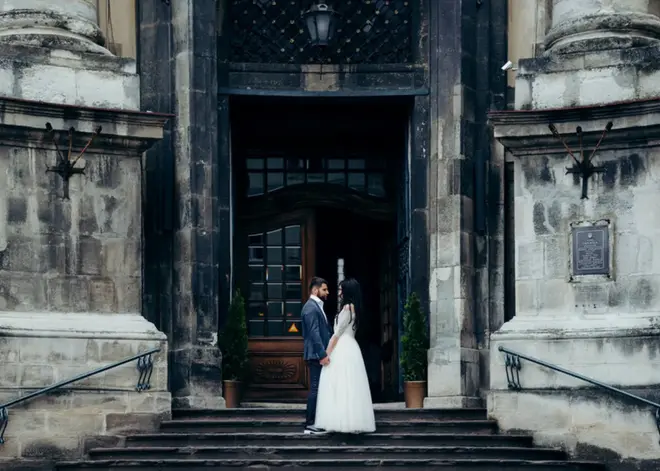
Two Paths to “I Do”
Every couple pictures their wedding day differently. Some imagine a packed church with flower arrangements lining the aisle. Others want something quieter: just the two of them, a few loved ones, and a short ceremony at the county courthouse.
Neither version is more valid than the other. A courthouse wedding and a traditional wedding both produce the same legal marriage certificate. The differences come down to cost, logistics, guest count, and personal style.
A courthouse ceremony typically costs $100 to $1,000 total, while the average traditional wedding in the United States runs about $35,000. Planning timelines differ just as sharply: courthouse weddings often take days to arrange, while traditional weddings require 10 to 14 months of preparation. This guide lays out the real pros and cons of each option so you can choose with confidence.
What a Courthouse Wedding Actually Looks Like
A courthouse wedding (also called a civil ceremony) takes place at a government building, officiated by a judge, justice of the peace, or county clerk. The ceremony itself usually lasts between 5 and 20 minutes.
Here is what you can generally expect:
- The setting. A courtroom, clerk’s office, or designated ceremony room. Some courthouses have striking architectural details. San Francisco City Hall is a popular choice for good reason.
- The guest list. Most courthouses allow a small number of guests, often between 2 and 10. Some locations require at least one witness.
- The paperwork. You will need a marriage license obtained beforehand. Fees vary by state and county, typically ranging from $30 to $100.
- The ceremony. A short reading of vows (standard or personalized, depending on the location), exchange of rings if you choose, and the official pronouncement.
Many couples are surprised by how meaningful a short ceremony can feel. Without the production of a large event, the focus stays entirely on the commitment itself.
What a Traditional Wedding Involves
A traditional wedding typically means a larger event held at a church, synagogue, banquet hall, or dedicated wedding venue. These ceremonies tend to follow a more formal structure and often include religious or cultural elements.
The planning timeline for a traditional wedding usually spans 10 to 14 months. That includes booking the venue, hiring vendors (photographer, caterer, florist, DJ or band), sending invitations, arranging rehearsals, and coordinating the day itself.
The average cost of a wedding in the United States sits around $35,000 as of 2025, though that number shifts dramatically based on location, guest count, and the choices you make along the way. In cities like New York or Los Angeles, couples regularly spend $50,000 or more.
The Real Cost Comparison
Cost is often the first thing couples weigh, and the gap between these two options is significant.
Courthouse wedding costs:
| Expense | Typical Range |
|---|---|
| Marriage license fee | $30 to $100 |
| Officiant fee (if separate) | $50 to $150 |
| Optional photographer (1 hour) | $200 to $500 |
| Outfit (if purchasing new) | Varies widely |
| Typical total | $100 to $1,000 |
Traditional wedding costs:
| Expense | Typical Range |
|---|---|
| Venue rental | $3,000 to $15,000+ |
| Catering | $5,000 to $20,000+ |
| Photography/videography | $2,000 to $6,000 |
| Flowers and decor | $1,500 to $5,000 |
| Attire and alterations | $1,000 to $5,000 |
| Music and entertainment | $1,000 to $4,000 |
| Typical total | $15,000 to $50,000+ |
The savings from a courthouse wedding can go toward a honeymoon, a down payment on a home, or a reception celebration after the ceremony. Many couples choose to do the legal part at the courthouse and throw a party later, getting the best of both approaches.
For more tips on keeping costs manageable, take a look at our guide on how to set a wedding budget without breaking the bank.
Pros and Cons Side by Side
Courthouse Wedding Pros
- Dramatically lower cost. You can get married for under $200 if you keep it simple.
- Less stress. No vendor coordination, seating charts, or timeline management.
- Speed. From license to ceremony, many couples complete the process within a week or two.
- Intimacy. A small guest list means your closest people are right there with you.
- Flexibility afterward. You can still have a reception, a dinner party, or a delayed celebration months later.
Courthouse Wedding Cons
- Limited space for guests. If your family expects to be there, a small ceremony room can create tension.
- Less customizable. Some courthouses have strict rules about decorations, music, and photography.
- The setting may feel impersonal. Government buildings vary widely in character. Some are beautiful, others are purely functional.
- Family expectations. Relatives who imagined a big wedding may feel left out, and that is worth addressing directly before making your decision.
Traditional Wedding Pros
- A full celebration. The ceremony, reception, dancing, speeches, and traditions create a day-long event.
- Room for everyone. Large guest lists accommodate extended family, coworkers, and friends.
- More creative control. You choose the venue, decor, music, food, and flow of the entire event.
- Cultural and religious significance. For couples who value those traditions, a church or temple wedding carries deep meaning.
Traditional Wedding Cons
- High cost. Even a modest traditional wedding often exceeds $15,000.
- Planning demands. Expect 10 to 14 months of decisions, deposits, and coordination.
- Stress. Vendor issues, family politics, weather concerns, and logistical hiccups come with the territory.
- Less time together. Many couples say they barely spent time with each other at their own wedding because they were busy greeting guests and managing the schedule.
You Can Mix Both Approaches
You do not have to choose one or the other entirely. Many couples combine elements of both, and this hybrid approach is increasingly common.
Popular hybrid approaches:
- Courthouse ceremony + restaurant dinner. Get legally married in the morning, celebrate with 20 to 30 guests over a nice dinner that evening.
- Courthouse now, big party later. Some couples marry at the courthouse and host a full reception weeks or months afterward. This works especially well for couples who want to elope and have a wedding later.
- Small ceremony + backyard reception. Keep the ceremony intimate, then open it up to a larger group for the celebration. A summer backyard gathering with catering can feel wonderful at a fraction of traditional venue costs.
- Courthouse ceremony with personal touches. Write your own vows, bring a small bouquet, wear a dress that feels special to you, and hire a photographer for an hour. A few intentional details make a big difference.
If you go the courthouse route, avoid common planning mistakes by checking your location’s specific rules about guests, photography, and scheduling in advance.
How to Decide What Fits You
Ask yourselves these questions:
-
What matters most about the day? If your answer is “being married,” a courthouse ceremony gets you there quickly and affordably. If your answer is “celebrating with everyone we love,” a larger wedding makes sense.
-
How do you feel about being the center of attention? Some people thrive on it. Others find large events draining. Be honest with each other.
-
What is your financial situation? Starting a marriage with wedding debt adds real stress. A courthouse wedding lets you begin your life together on solid financial footing.
-
What do your families expect? Family expectations matter, even when they should not dictate your choices. Having an honest conversation early prevents hurt feelings later.
-
How important is the ceremony itself vs. the celebration? Many couples care more about the party than the vows. A courthouse ceremony plus a great reception gives you both.
There is no wrong answer here. The right wedding is the one that reflects your relationship, your values, and your budget.
Making Your Courthouse Wedding Feel Special
If you are leaning toward a courthouse ceremony, a few small investments can make the day feel distinctly yours.
Hire a photographer. Even one hour of professional photography gives you images to look back on for decades. Many photographers offer courthouse wedding packages at a fraction of full-day rates.
Dress with intention. You do not need a traditional gown, but wearing something that makes you feel great matters. Check out our courthouse wedding dress code guide for ideas on what both you and your guests can wear.
Write personal vows. If your courthouse allows it, skip the standard script and say what you actually want to say. Keep them the right length and speak from the heart.
Plan something afterward. A lunch at your favorite restaurant, a champagne toast at a rooftop bar, or a picnic in the park. Give the day a second act.
Pick a meaningful location. Some cities have stunning city hall buildings with architectural details that rival any wedding venue. Los Angeles, San Francisco, and Atlanta are all popular choices for good reason.
The Day Belongs to You
The courthouse vs. traditional wedding question does not have a universal answer. It comes down to what you and your partner actually want, not what social media or family tradition says you should want.
A $50 courthouse ceremony and a $50,000 traditional wedding both end the same way: two people legally and lovingly committed to each other. The details should serve your priorities, not create unnecessary pressure.
Start by talking honestly with your partner about budget, priorities, and what kind of day would make you both genuinely happy. The rest will follow from there.
Frequently Asked Questions
Is a courthouse wedding legally the same as a traditional wedding?
Yes. A courthouse wedding produces the same legal marriage certificate as a traditional ceremony. The officiant (a judge, justice of the peace, or county clerk) has the same legal authority to marry you as a religious leader. The only requirement is a valid marriage license, which is the same for both types.
How much does a courthouse wedding cost compared to a traditional wedding?
A courthouse wedding typically costs between $100 and $1,000 total, covering the marriage license fee ($30 to $100), an optional officiant fee ($50 to $150), and any extras like a photographer. A traditional wedding in the United States averages around $35,000, with costs in major cities often exceeding $50,000.
Can you still have a reception after a courthouse wedding?
Absolutely. Many couples get legally married at the courthouse and host a separate celebration afterward. This can range from a dinner at a favorite restaurant the same evening to a full reception weeks or months later. The hybrid approach gives you the simplicity of a civil ceremony with the social experience of a larger event.
How long does a courthouse wedding ceremony take?
Most courthouse ceremonies last between 5 and 20 minutes. The exact length depends on whether you use standard vows or write your own, whether you include a ring exchange, and the specific courthouse’s procedures. The entire visit, including paperwork and waiting, usually takes under an hour.
Do you need witnesses for a courthouse wedding?
Requirements vary by state and county. Most states require one or two witnesses who are at least 18 years old. Some courthouses can provide a witness if you do not bring one. Check with your local county clerk’s office before your appointment to confirm the specific requirements for your location.