Why Renew Your Vows? 8 Reasons Couples Choose To Do It
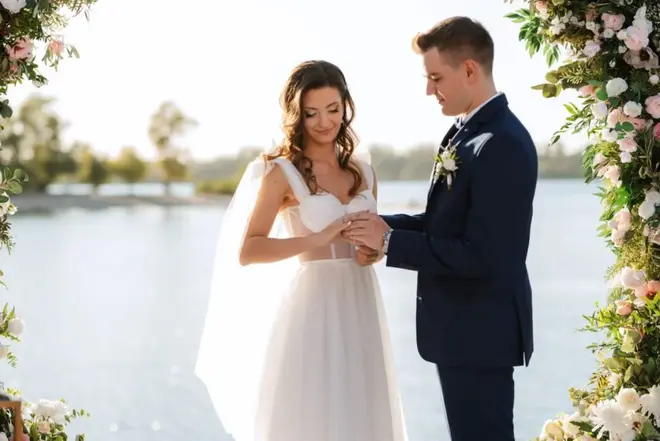
A vow renewal is a ceremony where a married couple restates their commitment to each other. Unlike the original wedding, there are no legal requirements: no marriage license, no officiant signatures, no waiting periods. The ceremony is purely symbolic, which gives you complete freedom over format, location, and guest list.
Some couples plan a full reception with formal attire and a guest list that rivals the original wedding. Others keep it small, with just the two of them reading new vows on a beach, in a park, or at the courthouse where they first got married. There is no wrong approach. The point is the promise, not the production.
Celebrating a Milestone Anniversary
Reaching 10, 25, or 50 years of marriage is the most common reason couples choose a vow renewal. A ceremony gives the anniversary more weight than dinner at a restaurant, turning a date on the calendar into a shared event your family and friends can witness.
The words you say to each other at year 25 carry different meaning than the ones you said as newlyweds. You are no longer promising based on hope alone. You are promising based on lived experience, including the careers, children, relocations, and losses that shaped the marriage along the way.
Many couples write entirely new vows for milestone renewals, referencing specific moments from their years together. That personal detail is what separates a vow renewal from a standard anniversary celebration. If you need guidance on length and tone, our guide on how long wedding vows should be applies to renewal vows just as well.
Getting the Wedding You Actually Wanted
Not every wedding goes according to plan. Budget constraints force compromises. Family pressure shapes the guest list, the venue, or the ceremony style in ways that do not reflect who you are as a couple.
A vow renewal is a second chance at the celebration itself. You can choose an intimate city hall ceremony, a destination event, or a backyard gathering with only your closest people. There is no obligation to follow anyone else’s expectations this time around.
Couples who eloped often use a vow renewal for exactly this reason. If you eloped and want a celebration later, a vow renewal provides the natural framework. You get the public declaration and the party without repeating the legal process.
Including Your Children in the Ceremony
Many couples get married before they have children, or when their kids are too young to remember the day. A vow renewal changes that. Your children can walk you down the aisle, hold the rings, read a poem, or stand beside you as witnesses.
For kids, watching their parents publicly choose each other again can be deeply reassuring. It is a visible statement that the family unit is strong. Some couples incorporate “family vows” where they make promises not just to each other, but to their children as a group.
This reason resonates especially with blended families. A vow renewal can serve as a unifying event, bringing stepparents and stepchildren into a shared ritual that the original wedding did not include. Deciding on meaningful wedding roles for family members makes the ceremony feel more personal for everyone involved.
Rebuilding After a Rough Patch
Every long marriage has difficult seasons. Some couples face infidelity, health crises, financial strain, or periods of emotional distance that test the relationship to its limits. Coming through the other side of that kind of challenge is its own accomplishment.
A vow renewal after a rough patch is not about pretending the hard times did not happen. It is about acknowledging them openly and choosing each other anyway. The ceremony becomes a line in the sand: everything before this moment was then, and everything after is now.
Couples who have gone through separation and reconciliation sometimes find a vow renewal especially meaningful. It gives the reconciliation a tangible marker, something beyond “we decided to stay together.”
Reconnecting With Friends and Family
Weddings bring people together in a way that few other events can match. But life pulls people apart over time. Friends relocate to different cities. Family members get busy with their own routines. The group that celebrated your wedding day may not have been in the same room together in years.
A vow renewal creates a reason to gather everyone. It is part reunion, part celebration. And because there is less pressure than a first wedding (no legal stakes, no meeting-the-in-laws anxiety), the atmosphere tends to be more relaxed and genuinely fun.
If your original wedding was small or private, this is also your chance to include people who were not there the first time: friends you have made since, colleagues who became close, or family members who could not attend.
Getting New Wedding Photos
This reason sounds superficial until you think about it. Wedding photos are some of the most displayed images in any home. If your original photographer did a poor job, if the photos got lost or damaged, or if you never had professional photos taken at all, that gap can bother you for decades.
A vow renewal gives you a fresh set of professional images. There is something meaningful about photos that show you as you are now, not just as you were then. The two of you at 45 or 60, still choosing each other, still dressing up for each other. Those photos tell a story that first-wedding photos cannot.
If photography is one of your main motivations, plan accordingly. Hire a photographer you trust, choose a location with good natural light, and build time into the day for portraits. Investing in wedding videography is also worth considering, since video captures the emotion of spoken vows in a way that still photos miss.
Strengthening Your Commitment
Not every vow renewal is triggered by a dramatic event or a milestone year. Some couples feel that their marriage would benefit from a deliberate, public recommitment. The daily grind of work, parenting, and routine can make a relationship feel like it is running on autopilot. A vow renewal disrupts that pattern.
The planning process itself is part of the benefit. Choosing what to say in your vows, deciding on the ceremony style, and talking about what your marriage means right now forces a level of conversation that might not happen otherwise.
Think of it less as a grand gesture and more as a reset. A deliberate pause to say, “This still matters to me, and I want you to know that.”
Having a Great Party
Sometimes the reason is straightforward: you want to celebrate, and your marriage is a good thing to celebrate. A vow renewal gives you a framework for throwing a party with purpose. Live music, good food, a meaningful toast, and a room full of people who care about you.
The beauty of a vow renewal party is the built-in emotional weight. It is not just another birthday or holiday gathering. There is a ceremony at the center, and that ceremony gives the entire event significance that a regular party does not carry.
If budget is a concern, a vow renewal can be as affordable as you want it to be. You do not need a venue, a caterer, or a DJ. A simple ceremony at home with a potluck dinner afterward works just as well as a formal event, as long as the intention behind it is real.
How to Plan a Vow Renewal That Feels Right
There is no rulebook for vow renewals, which is both the appeal and the challenge. A few things worth considering:
- Timing is personal. There is no correct anniversary year or “right” moment. If the desire is there, that is reason enough.
- Keep it yours. Resist the urge to replicate your original wedding unless that is genuinely what you want. This ceremony gets to be whatever the two of you decide.
- Write new vows. Reading the same vows from your wedding day can feel flat. Write new ones that reflect where you are now, what you have been through, and what you are looking forward to.
- Skip the stress. A vow renewal should feel like a celebration, not a second round of wedding planning anxiety. Keep the logistics simple enough that you can actually enjoy the process.
- Include the people who matter most. Whether that is 200 guests or just your partner and a witness, choose the audience that will make the ceremony feel authentic.
A vow renewal is, at its core, a choice. Not a requirement, not an obligation, not a formality. It is two people standing in front of each other and saying, “I would do this again.” That is a powerful thing, no matter how big or small the ceremony turns out to be.